
You get dividends by owning shares of companies that pay them out from their profits, and you gotta buy those shares before the ex-dividend date through a simple brokerage account. Its that basic, but let me break it down real clear so you see exactly how dividends work and why I think they could be a game-changer for your money. I been telling folks this for years – dividends are like a thank you payment from big companies to their shareholders, and once you set it up right, the cash just shows up regular without you lifting a finger. We talkin steady income that can grow over time, especially if you reinvest smart. In this post I walk you through every step, the key dates you can’t miss, types of dividends, and tips to avoid rookie mistakes. No fluff, just practical stuff I wish I knew sooner.
What Are Dividends, Anyway?
Before we jump into how to get dividends, let’s make sure we’re on the same page about what they actually are.
Dividends are portions of a company’s profits paid out to shareholders. Think of it as your slice of the company’s success pie! Companies typically pay these dividends quarterly (every three months), though some pay monthly or semi-annually.
For example, if you own 30 shares in a company that pays $2 in annual dividends per share, you’ll receive $60 per year in dividend payments. That might not sound like much, but imagine owning hundreds or thousands of shares across multiple dividend-paying companies!
The 4 Crucial Dates You Absolutely Need to Know for Getting Dividends
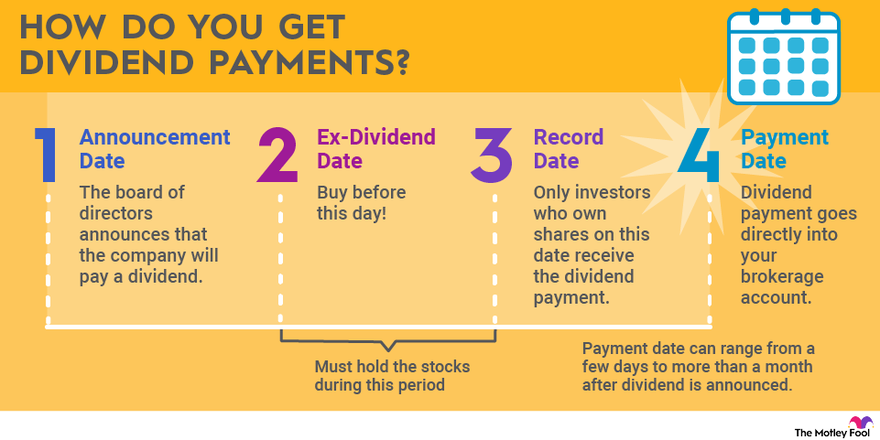
Getting dividends ain’t random – theres a clear timeline every company follows. I always hammer these dates home because missing the ex-dividend date means you miss the payout entirely. Here they are, explained plain:
- Declaration Date: This is when the company announces it will pay dividends, including the amount and upcoming dates. Its the starting gun.
- Ex-Dividend Date: Super important – the cutoff. You must own the stock before this date to get the dividend. Buy on or after it, and you miss out. The stock price usually drops by about the dividend amount on this day too.
- Record Date: Company checks its books to see who owns shares as of this date. If your name is on the list from before the ex-dividend date, youre in.
- Payment Date: The money actually lands in your account, could be weeks later. Cash hits your brokerage or gets mailed as a check.
I recommend marking these in your calendar if youre serious about dividends. For instance, with companies like Johnson & Johnson or Exxon Mobil, these dates come around predictable like clockwork since they been paying for decades.
5 Simple Steps to Start Getting Dividends Right Now
Let me tell ya, anyone can get dividends if you follow these steps. I done it myself and helped friends set it up. Heres how:
- Open a Brokerage Account: First thing, you need somewhere to buy stocks. Places like Fidelity, Charles Schwab, or even Robinhood make it free and easy these days. No commissions on most trades anymore. I started with one that lets fractional shares so you dont need thousands to begin.
- Research Dividend-Paying Companies: Not all stocks give dividends. Focus on established ones in utilities, healthcare, banks, oil and gas, or REITs. Look for Dividend Aristocrats – companies like Johnson & Johnson, Target, IBM, Sherwin-Williams, or Exxon Mobil that raised dividends every year for 25+ years. Thats stability right there.
- Evaluate Quality With Key Metrics: Dont chase the highest dividend yield blindly. Check the dividend yield first for your potential return. Then the payout ratio – if its over 100%, the company might be paying more than it earns, risky. Dividend growth rate matters too; companies increasing payouts yearly are gold. I always say a solid payout ratio under 60% feels safer for long-term dividends.
- Purchase the Stocks: Buy before the ex-dividend date! Use your brokerage app, pick shares or fractional ones with as little as $5-10. Own em, and if you hold through the ex-dividend date, dividends come your way.
- Set Up Dividend Reinvestment Plans (DRIP): This is my favorite part. Many brokerages let dividends automatically buy more shares. Say you get $20 in dividends and the stock is $100 – DRIP grabs you 0.2 extra shares. Over time, those new shares generate their own dividends, creating a snowball effect. I love DRIP because it compounds your dividends without extra effort.
Follow these and youll start seeing payments roll in. We talking passive income that can cover bills someday.
Types of Dividends You Might Actually Receive
Dividends come in different flavors, and knowing em helps you pick what fits. I break it down here:
- Cash Dividends: Most common – straight money deposited in your account. Use it for bills or reinvest. Super straightforward.
- Stock Dividends: Instead of cash, you get extra shares of the company. Good for growth without selling.
- Special Dividends: One-time payouts when a company has extra cash from big profits or sales. Not regular, but nice bonus.
- Preferred Dividends: For preferred stock owners – fixed like bonds, paid before common shareholders. Less volatile.
Regular dividends usually hit quarterly, but some pay monthly for even steadier cash flow. Special dividends pop up unpredictable but can be hefty.
How to Pick Strong Dividend Stocks (Without Getting Burned)
Picking right makes all the difference for reliable dividends. I evaluate like this every time:
- Dividend Yield: High is tempting but watch out – over 8% often signals trouble ahead.
- Dividend History: Has the company paid consistently? Cuts in the past mean red flags.
- Dividend Growth Rate: Look for steady increases that beat inflation.
- Payout Ratio: Lower means more room to keep growing dividends safely.
- Company Health: Stable earnings in slow-growth industries beat shaky tech startups.
Companies that pay dividends tend to be mature ones with steady cash. Young growth stocks like some tech rarely bother with dividends because they reinvest everything.
Dividend Reinvestment Plans (DRIP) – Why I Swear By Them for Building Wealth
DRIP turns dividends into a wealth machine. When those payments hit, they buy more stock automatically. No taxes on the reinvested part until you sell later in taxable accounts. I seen accounts double faster thanks to DRIP compounding. For example, start with 100 shares paying $2 yearly dividends – DRIP adds shares that then pay their own $2 next year. Its kinda magical over 10-20 years.
Taxes on Dividends – What You Need to Know to Keep More
All dividends get taxed, but not equally. Qualified dividends (from U.S. companies if you hold shares at least 61 days around the ex-dividend date) get lower capital gains rates – 0%, 15%, or 20%. Ordinary ones tax at your regular income rate. Brokerages send a 1099-DIV form each year. Hold in retirement accounts like IRAs and taxes wait till withdrawal. I always check qualified status to save on taxes.
Easier Path: Dividend Funds and ETFs for Hands-Off Dividends
If picking individual stocks feels overwhelming, go for dividend ETFs or mutual funds. Ones like Vanguard Dividend Appreciation ETF (VIG) or SPDR S&P Dividend ETF (SDY) hold bunches of strong dividend payers. You still get dividends, but the fund picks and diversifies for you. Perfect for beginners wanting dividends without the homework.
Real Stories of Folks Getting Dividends (And What They Teach Us)
Take my buddy Mike – he opened a brokerage, bought shares in Johnson & Johnson and Exxon Mobil before their ex-dividend dates, set up DRIP, and now gets $300 monthly after a few years. Started small, just $5k. Or Sarah, a retiree who lives partly off dividends from a diversified list. She says the steady payments beat worrying about selling stocks. I got my own portfolio humming with dividends too – its not huge yet but growing nice through payout ratio smart picks.
On the flip, a guy I know chased crazy high dividend yield without checking payout ratio and got burned when the company cut dividends. Lesson: quality over yield.
Quick Comparison Table: Cash Dividends vs. Other Options
| Aspect | Cash Dividends | Stock Dividends | Growth Stocks (No Dividends) |
|---|---|---|---|
| Income Type | Direct cash in account | Extra shares | None until you sell |
| Best For | Immediate spending or DRIP | Long-term compounding | High growth potential |
| Risk Level | Lower if company stable | Similar to stock price | Higher volatility |
| Taxes | Qualified or ordinary | Deferred till sale | Capital gains on sale |
| Frequency | Quarterly most times | Occasional | N/A |
See how dividends fit different goals?
Pros and Cons of Chasing Dividends
Pros:
- Passive income stream
- Compounding with DRIP
- Often from stable companies
- Cushion in down markets
Cons:
- Dividends can get cut
- Taxes eat into returns in taxable accounts
- Might miss bigger growth from non-payers
- Requires patience
I weigh these every time I add to my holdings.
Common Mistakes to Avoid When Going After Dividends
Dont buy right on ex-dividend date – you miss the payout. Never ignore payout ratio or chase yield alone. Forget to diversify across industries. And selling right after ex-dividend date? Nah, hold for the long game. I made a couple these early on, but learned quick.
Advanced Tips to Level Up Your Dividend Game
- Diversify your dividend sources so one cut dont hurt bad.
- Reinvest most dividends unless you need income now.
- Watch for dividend growth over raw yield.
- Use apps to track ex-dividend dates and yields.
- Start small and scale – even $100 a month in dividends adds up.
How much you need depends. For $100 monthly income at 4% average dividend yield, you might aim for $30,000+ portfolio. But start wherever you can.
Wrapping Up: Getting Dividends Is Easier Than You Think
So how do you get dividends? Own the right stocks before the ex-dividend date, hold em, and let the process work with DRIP if possible. I believe this strategy builds real financial freedom over time. Whether you go individual stocks like Johnson & Johnson and Exxon Mobil or easy ETFs, the key is starting and staying consistent. Dividends aint get-rich-quick but they sure feel rewarding when payments hit regular.
What about you? Got any dividend stories or questions on yield or payout ratio? Drop em in comments – I read every one and might share more tips next post. Lets build that passive income together!
Dividend Stocks Explained for Beginners – What are Dividend Stocks?
Frequently Asked Questions About Getting Dividends
How much money do I need to start investing in dividend stocks?
You can start with as little as $1-$5 with brokerages that offer fractional shares. However, to generate meaningful income (like $100/month), you’d typically need a larger portfolio value of $30,000+ (assuming a 4% average dividend yield).
How often are dividends paid?
Most U.S. companies pay dividends quarterly (four times per year), but some pay monthly or semi-annually. Each company sets its own schedule.
Can I live off dividend income?
Absolutely! Many retirees do this. However, to generate enough income to live on (say $40,000 per year), you’d need approximately $1 million invested at a 4% dividend yield. Building this takes time and consistent investing.
Do all stocks pay dividends?
No, many companies don’t pay dividends, especially younger growth companies that reinvest profits back into the business. In fact, only about 84% of S&P 500 companies currently pay dividends.
How can you get dividends?
To qualify for a dividend payout, you must be a “Shareholder of Record”. That means you must already be listed as one of the company’s shareholders on the Record Date. Dividend payouts are usually in relation to the overall financial health of the company, as well as the price at which their stocks/shares are trading.
How long do I have to hold a stock to get the dividend?
Typically, the ex-dividend date is the same day as the record date. The ex-dividend date represents the cut-off point for receiving the dividend. You have to own a stock prior to the ex-dividend date in order to receive the next dividend payment.
What does a 4% dividend mean?
The dividend yield shows the annual dividend as a percentage of the company’s current share price. It indicates how much return investors can expect relative to their investment. For example, if a stock pays $4 annually and its current price is $100, the dividend yield is 4%.